
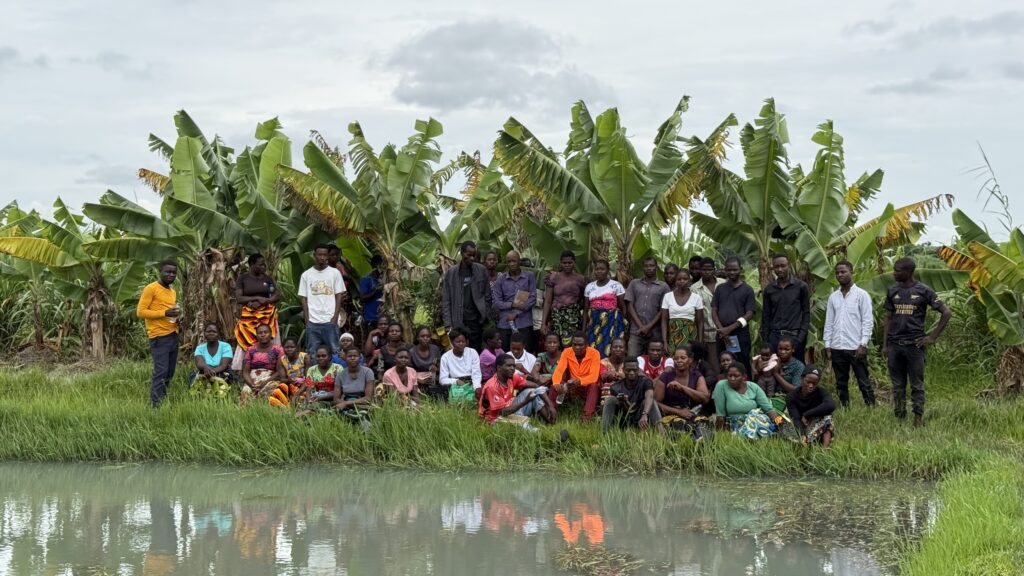
The PIF: Smart-Aqua Project continues to make important progress in providing vulnerable youth and community members with sustainable, climate-smart aquaculture skills at the Kawjo Foundation’s field school and aquaculture demonstration site in Mpingu. Since our last project update in June, we have taken meaningful steps forward to strengthening participants’ knowledge of sustainable pond management practices and greenhouse-based aquaculture systems.
Last week, our Smart-Aqua Project Officer Hephzibah Hermes conducted a one-day capacity-building training session focused on fish growth monitoring and feeding requirements. The training brought together 50 youth participants from surrounding communities, including 35 women and 15 men. Participants received hands-on instruction in key areas such as how to sample fish, how to determine type and amount of feed to feed fish and the operation of greenhouse systems that integrate fish farming with diversified crop production.
The training emphasized practical skills that participants can immediately apply within their own communities to improve productivity, food security, and livelihoods. Through this approach, the Smart-Aqua Project continues to promote climate-resilient agriculture while creating economic opportunities for youth.
During the session, we had the opportunity to speak with Elijah Malaulo, the Mthunthumala Youth Club Chairperson, who shared his thoughts on the importance of these training sessions in building confidence among young boy and girl farmers. We also spoke with Tamara Chauluka, a club member from TA M’bwatalika, who shared how the skills gained during this training will help her improve her ability to maintain a pond of her own while contributing positively to her community.
These training sessions mark an important milestone in the Smart-Aqua Project as we continue working toward sustainable, community-driven aquaculture solutions in Mpingu and beyond. Check out these success stories in the video below to hear from our participants themselves.